
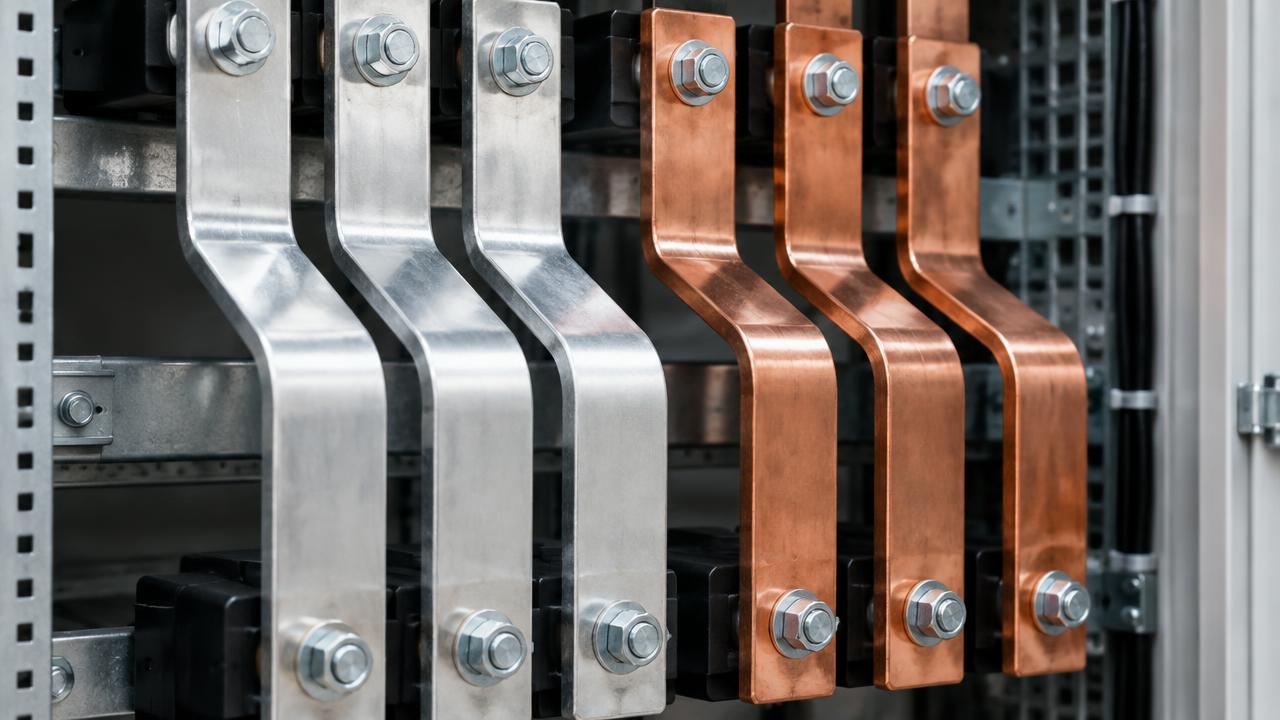
Tin-Plated vs. Bare Copper Bus Bar: When Plating Is Worth It
Open a modern switchboard and you'll often see bright silver-gray bus instead of the familiar copper color. That's tin plating — one of the most common, and most frequently debated, specifications on copper bus bar. Is it necessary, or just added cost? The answer depends on environment, mating materials, and how joints will be maintained.
What Tin Plating Does
- Prevents oxidation and tarnish. Bare copper forms oxides and sulfides over time, especially in humid or industrial atmospheres. Tin's own thin oxide breaks easily under bolt pressure.
- Stabilizes contact resistance. Plated joints maintain consistent resistance over years of service.
- Improves compatibility with aluminum. Tin reduces galvanic potential between copper and aluminum conductors — see our guide to joining copper to aluminum.
- Improves solderability for assemblies that require it.
Plating Standards and Thickness
Electrodeposited tin is commonly specified to ASTM B545. Thickness for bus bar typically ranges from about 0.0001" to 0.0005" (2.5–12.5 µm) depending on service. Equipment standards such as UL 891 for switchboards and NEMA guidelines influence what manufacturers specify.
Plating Options Compared
| Finish | Best For | Considerations |
|---|---|---|
| Bare copper | Clean, dry indoor gear; welded or brazed joints | Lowest cost; clean before assembly |
| Tin plated | General switchgear, mixed Cu/Al, humid sites | Moderate cost; industry default |
| Silver plated | High-temperature joints, sliding contacts, high current density | Highest cost; tarnishes but remains conductive |
| Nickel plated | High-temperature or corrosive environments | Higher contact resistance than tin or silver |
When Bare Copper Is Fine
Bare C110 copper performs well in climate-controlled indoor equipment where joints are cleaned and treated with contact compound at assembly, and in grounding applications where some patina is acceptable. Many utilities and OEMs use bare bus successfully for decades.
When Plating Pays Off
- Outdoor, coastal, or industrial atmospheres with sulfur or chlorides.
- Terminations to aluminum cables or bus.
- Equipment with long maintenance intervals where joint resistance must stay stable.
- Data center and critical-power systems — see copper grounding in data centers.
Plate Before or After Fabrication?
Plate after punching, bending, and deburring whenever possible, so hole walls and cut edges are covered. Bending pre-plated bar can crack the tin layer on the outside radius.
Need plated bus bar? Maverick supplies cut, punched, bent, and tin- or silver-plated copper bus to your print. Explore our fabrication capabilities or request a quote.