
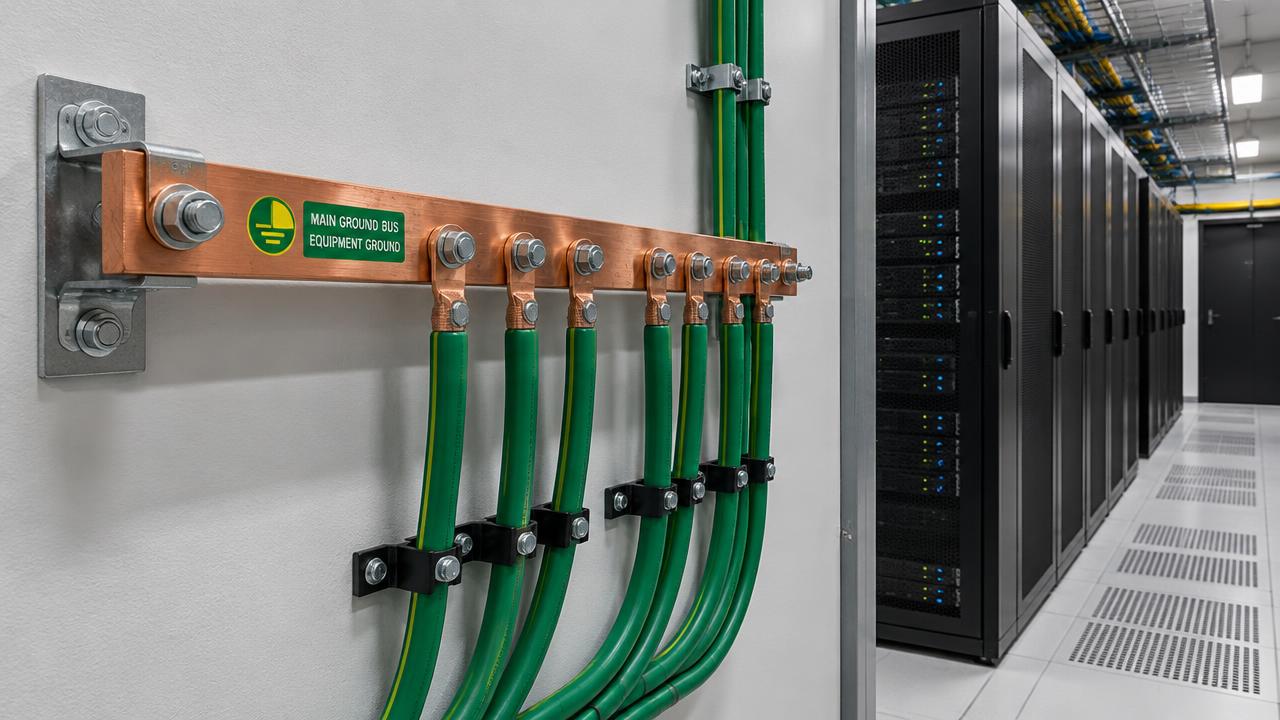
Copper Grounding and Bonding in Data Centers: Specifying the Right Bus Bar
Hyperscale and colocation build-outs are consuming copper at a historic pace — and not only in power distribution. Every data hall depends on a carefully engineered grounding and bonding network to protect people, equipment, and signal integrity. At the heart of that network is solid copper ground bar.
The Standards That Govern Data Center Grounding
Two documents drive most specifications in North America:
- NFPA 70 (National Electrical Code), Article 250, which sets the safety requirements for grounding and bonding electrical systems.
- ANSI/TIA-607, which defines the telecommunications bonding and grounding infrastructure — including the Primary Bonding Busbar (PBB, formerly TMGB) and Secondary Bonding Busbars (SBB, formerly TGB).
IEEE 1100 (the Emerald Book) provides additional guidance on powering and grounding sensitive electronic equipment.
Typical Ground Bar Dimensions
| Application | Typical Thickness | Typical Width | Length |
|---|---|---|---|
| Primary Bonding Busbar (PBB) | 1/4" (6 mm) min | 4" (100 mm) | Sized to terminations, often 12–20" |
| Secondary Bonding Busbar (SBB) | 1/4" (6 mm) min | 2" (50 mm) | Varies |
| Rack / cabinet ground bar | 1/8"–3/16" | 3/4"–1" | Rack height |
Always confirm dimensions against the project's engineered drawings — the values above reflect common practice, not a substitute for design.
Material and Finish
Ground bars are almost universally made from C110 electrolytic tough pitch copper for its ~100% IACS conductivity and corrosion resistance. Many specifications call for electro-tin plating to resist oxidation and keep contact resistance stable at lug interfaces. Bare copper is acceptable in many indoor environments when surfaces are cleaned and treated with antioxidant compound at assembly.
Hole Patterns and Fabrication
Ground bars are punched or drilled to accept two-hole compression lugs, typically on 5/8" or 1" centers with 7/16" or 9/16" holes, depending on lug size. Pre-punching at the service center eliminates field drilling, reduces copper chips in white space, and guarantees consistent spacing. Maverick's fabrication services handle punching, chamfering, deburring, and plating in one workflow.
Why Supply Timing Matters
Data center schedules are compressed, and grounding is installed early. Late ground bar delivery can stall inspections and energization. Partnering with a supplier that stocks copper bus bar and copper flat bar in common grounding sizes keeps projects on track.
Building or expanding a data center? Request a quote for cut-to-length, punched, and tin-plated copper ground bars — or explore how we support the industries driving today's power demand.