
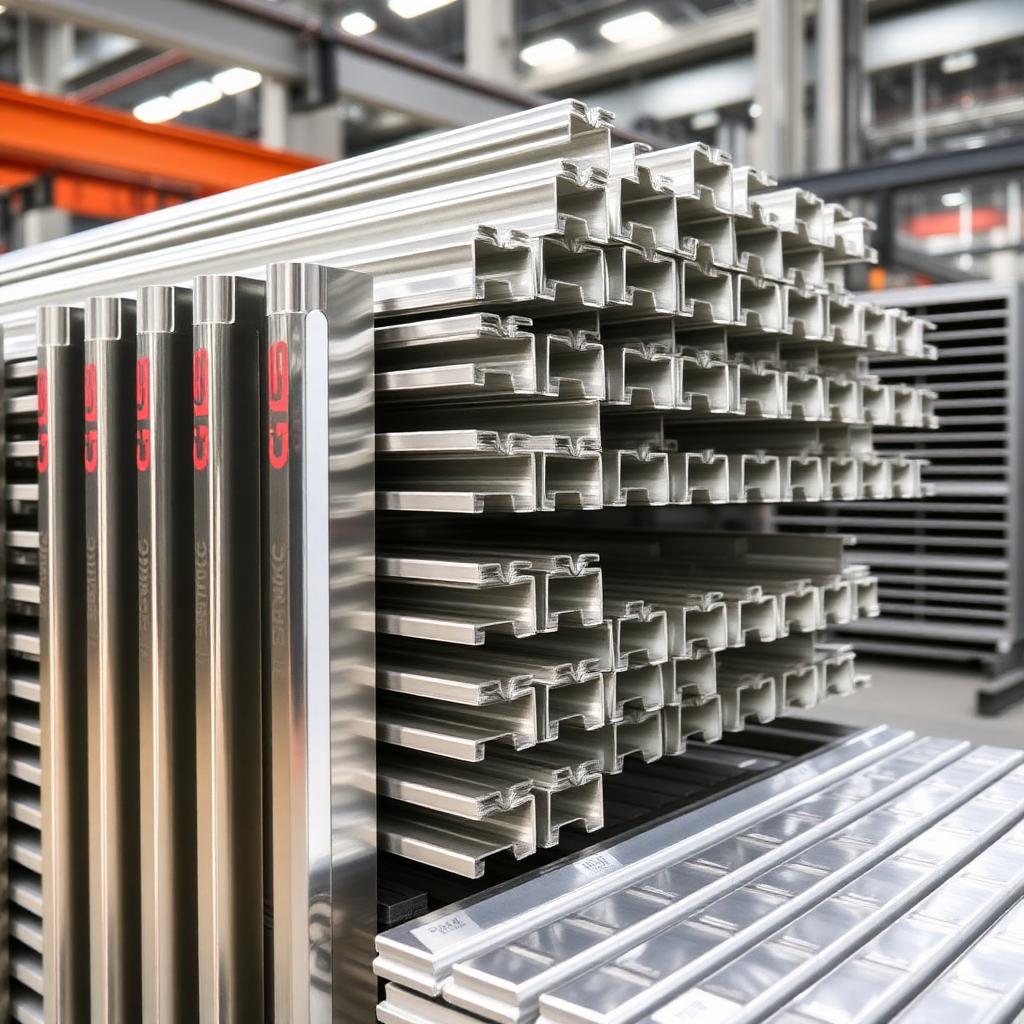
Aluminum Busbar Alloys: Why 6101 and 6063 Dominate Electrical Applications
Copper may be the highest-conductivity practical conductor, but aluminum has carved out a permanent place in power distribution — driven by weight, cost, and abundant supply. For large-scale switchgear, panelboards, transformers, and utility distribution, aluminum busbar is frequently the engineering and economic optimum. But aluminum's conductivity is far more sensitive to alloying and temper than copper's, which means alloy selection is decisive. Two alloys dominate the electrical busbar market: 6101 and 6063.
Why Aluminum at All?
Aluminum's appeal in busbar is straightforward. It has roughly 61% the conductivity of copper by volume but about twice the conductivity per unit weight, and at a fraction of the cost. For long bus runs, utility-scale distribution, and weight-sensitive equipment, those economics are compelling. As we covered in our copper vs. aluminum busbar comparison, the trade-off is that an aluminum bar must have a larger cross-section to carry the same current — acceptable in many designs, problematic where space is tight.
The catch is that aluminum's conductivity collapses with the wrong alloy. General structural alloys like 6061 sacrifice conductivity for strength, which is why dedicated electrical-grade alloys exist.
6101: The Electrical-Conductor Grade
Alloy 6101 is purpose-built for electrical conductors. It is formulated to maximize conductivity while retaining enough mechanical strength for self-supporting bus. In the common T6 temper, 6101 reaches roughly 57-59% IACS conductivity — the highest of any practical structural aluminum alloy — and the Aluminum Association specifically designates it for bus conductor applications.
6101 is the standard choice for switchgear bus, panelboard bus, and busway where the conductor must be both highly conductive and rigid enough to span supports. Different tempers (T6, T61, T63, T64) trade conductivity against strength, letting designers tune the bar to the mechanical load while keeping electrical losses low.
| Alloy/Temper | Conductivity (% IACS) | Relative Strength | Typical Use |
|---|---|---|---|
| 6101-T6 | ~57-59% | High | Self-supporting switchgear bus |
| 6101-T61 | ~59% | Moderate | Formed bus, bends |
| 6063-T6 | ~53-55% | Moderate | Extruded shapes, tubular bus |
| 6061-T6 | ~40-43% | Very High | Structural (not preferred for bus) |
6063: The Extrudable Workhorse
Alloy 6063 is the most extrudable aluminum alloy, allowing complex profiles, tubular bus, and custom shapes that 6101 cannot easily achieve. Its conductivity in T6 temper (~53-55% IACS) is slightly below 6101 but well above structural grades, making it the alloy of choice where the bus geometry is complex — tubular bus pipe, channel bus, and specialty extruded conductor profiles.
For round and tubular bus used in substations and large equipment, 6063 extrusions deliver the conductivity-to-formability balance the application needs. Where the design is a simple flat bar, 6101 is usually preferred for its higher conductivity; where it is an extruded profile, 6063 wins on manufacturability.
The Critical Detail: Joint Design
Aluminum busbar's reputation for reliability problems comes almost entirely from connections, not the conductor itself. Aluminum forms a tenacious, insulating oxide layer the instant it is exposed to air, and it has a higher coefficient of thermal expansion than copper. Poorly designed joints loosen and develop resistive hot spots over time.
Reliable aluminum joints require abrading through the oxide, applying an oxide-inhibiting joint compound, using Belleville (spring) washers to maintain clamping force through thermal cycles, and torquing to specification. The National Electrical Code and equipment listings govern these practices.
For copper-to-aluminum transitions, bimetallic connectors or tin plating prevent galvanic corrosion. Many manufacturers tin-plate aluminum bus at joint areas specifically to stabilize contact resistance.
Specifying Aluminum Busbar
- Flat self-supporting bus, maximum conductivity → 6101-T6
- Formed or bent bus → 6101-T61
- Tubular, channel, or custom extruded profile → 6063-T6
- Avoid 6061 for current-carrying bus — its conductivity is too low.
Require mill certifications confirming alloy, temper, and measured conductivity in % IACS. Conductivity is the property that directly determines I²R losses and operating temperature, so it should be a contractual line item — not assumed.
Sizing an aluminum bus project? Contact Maverick Metals for pricing on aluminum busbar, aluminum bus pipe, and aluminum flat bar in electrical-grade alloys, and see live benchmarks on our aluminum pricing page.