
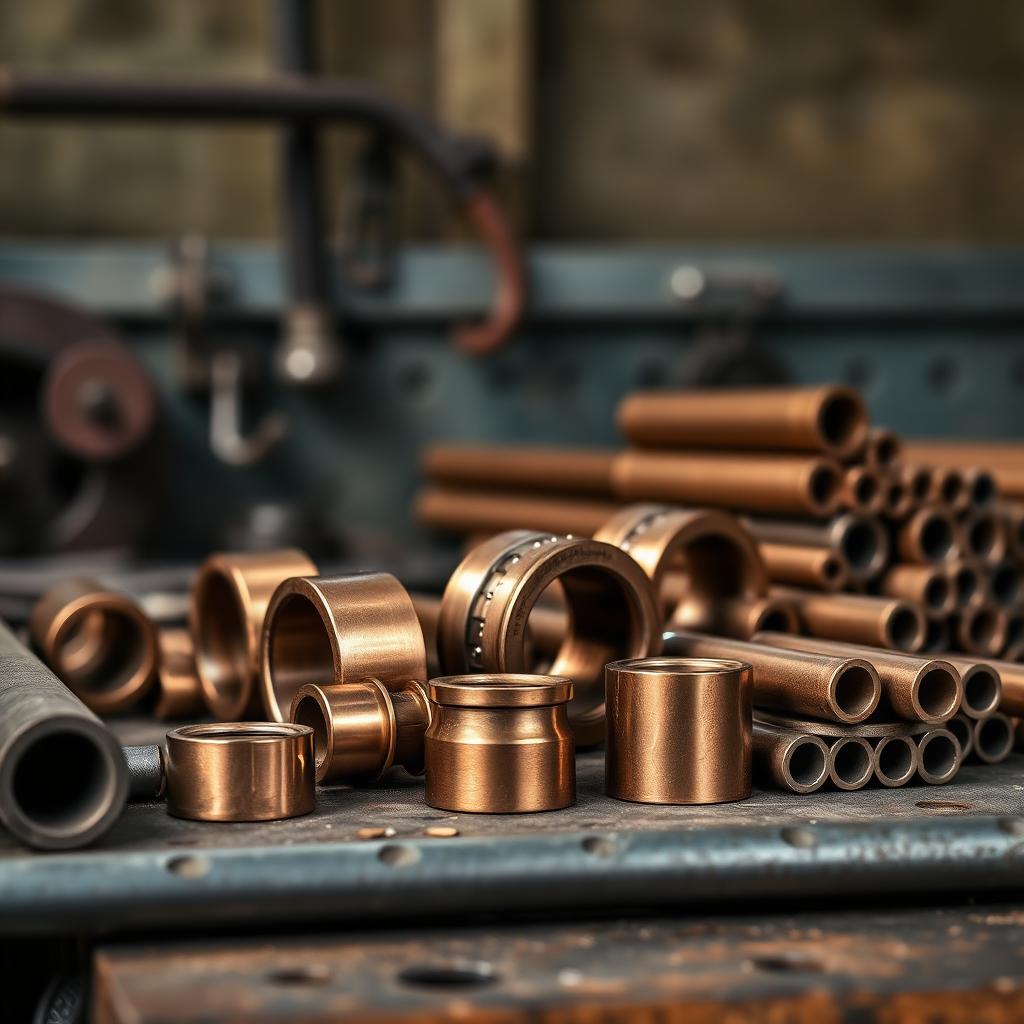
Bronze Bearing and Bushing Alloys: C932 vs. C954 for Wear Applications
Bronze has been the dominant bearing material for industrial machinery for over a century, and for good reason: it combines load-bearing strength, embeddability, conformability, and corrosion resistance in a way few materials match. But "bronze" — like brass — is a family, and selecting the wrong member for a bearing or bushing application leads to premature wear, galling, or seizure. This guide compares the two most widely specified bronze wear alloys: C932 bearing bronze (SAE 660) and C954 aluminum bronze.
What Makes Bronze a Good Bearing Material
A good plain bearing material must do several things at once: carry load without deforming, tolerate momentary loss of lubrication, embed abrasive particles rather than scoring the shaft, and resist corrosion. Bronze bearing alloys achieve this balance through their microstructure — a tough copper-tin or copper-aluminum matrix, often with lubricating phases or porosity that retain oil. The Copper Development Association documents this combination of properties across the cast bronze bearing family.
| Property | C932 (Bearing Bronze) | C954 (Aluminum Bronze) |
|---|---|---|
| Family | Leaded tin bronze | Aluminum bronze |
| Nominal Composition | 83% Cu, 7% Sn, 7% Pb, 3% Zn | 85% Cu, 11% Al, 4% Fe |
| Tensile Strength | ~35 ksi | ~85 ksi |
| Max Load Capacity | Moderate | High |
| Max Speed | High | Moderate |
| Best For | General-purpose bearings | Heavy load, low speed |
C932 (SAE 660): The General-Purpose Standard
C932 bearing bronze, also designated SAE 660, is the most widely used bearing bronze in North America. Its leaded tin bronze composition gives it excellent machinability, good antifriction properties, and the ability to run at higher surface speeds. The lead phase acts as a built-in lubricant, providing protection during marginal lubrication and start-stop cycles.
C932 is the default for general-purpose bushings, pump and motor bearings, thrust washers, and sleeve bearings operating under moderate loads at moderate-to-high speeds with reliable lubrication. It is forgiving, easy to machine to tight tolerances, and economical — which is why it is specified far more often than any other bearing bronze.
C954: When Load Dominates
Aluminum bronze (C954) trades some of C932's speed capability for dramatically higher strength and hardness. With tensile strength more than double that of C932, it is the alloy for heavily loaded, slow-moving applications: gear blanks, valve guides, heavy machine slides, forming dies, and bushings in construction and mining equipment.
C954 also brings superior corrosion and erosion resistance, performing well in seawater and acidic environments where leaded bronzes struggle. The trade-off is that it generates more frictional heat at high speed and is less tolerant of poor lubrication, so it is best matched with hardened shafts and adequate lubrication design.
Rule of thumb: high speed, moderate load → C932; high load, low speed → C954. When both extremes coexist, lubrication strategy and shaft hardness become the deciding factors.
Design Factors Beyond Alloy
Alloy selection is necessary but not sufficient. A reliable bronze bearing also depends on:
- PV limit — the product of pressure and velocity must stay within the alloy's rated capacity to avoid overheating and seizure.
- Shaft hardness and finish — a harder, smoother shaft extends bushing life, especially with aluminum bronze.
- Wall thickness and clearance — adequate running clearance accommodates thermal expansion and lubricant film.
- Lubrication — grooving, oil ports, or impregnation should match the duty cycle.
For wear-critical components, require mill test reports verifying composition and mechanical properties against the governing ASTM B505 (continuous cast) or B271 (centrifugal cast) standards. Bronze sourced without certification can vary enough in tin or aluminum content to change wear behavior meaningfully.
Specifying bronze for a wear application? Contact Maverick Metals for guidance and pricing on bronze round bar, bronze hollow bar, and continuous-cast bronze stock.