
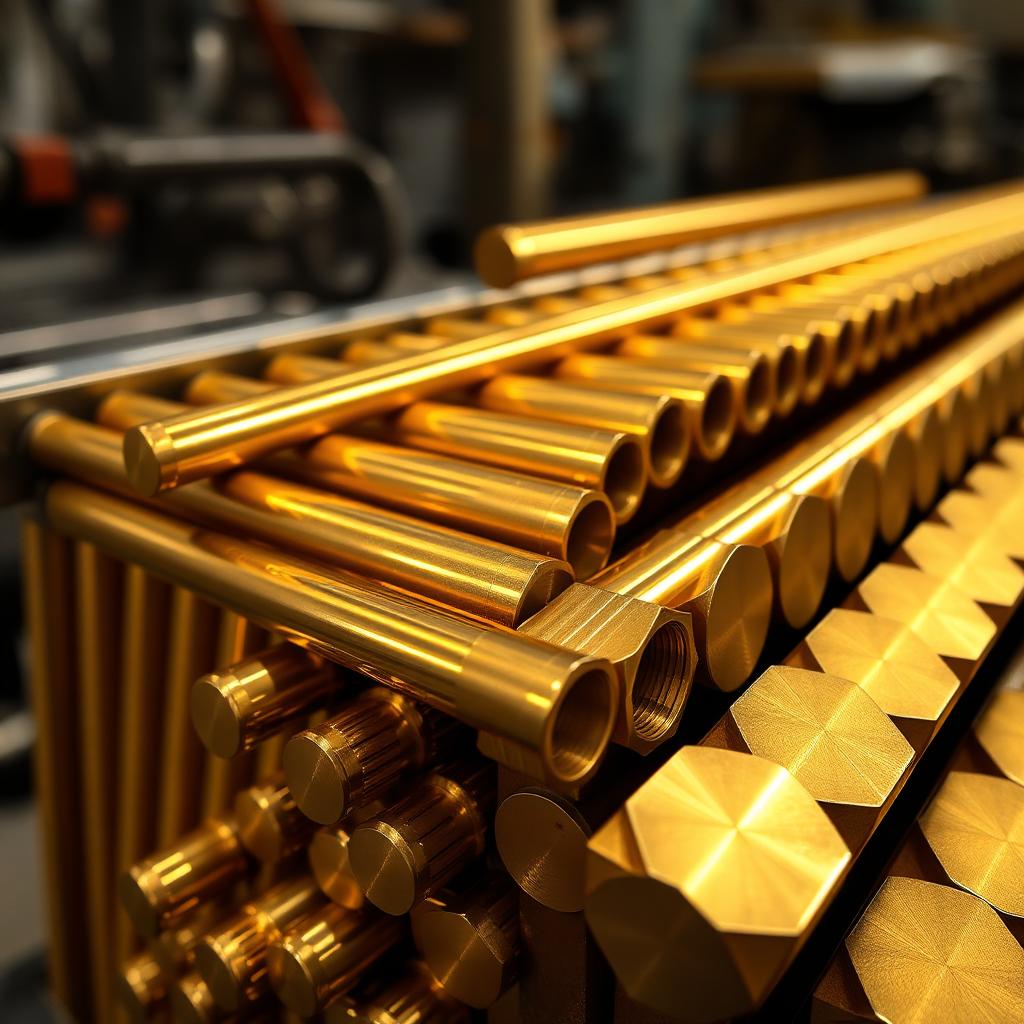
Brass Alloy Selection: C360, C260, and C464 for Industrial Applications
"Brass" is one of the most overloaded terms in metals procurement. It refers not to a single material but to an entire family of copper-zinc alloys whose properties shift dramatically with composition and the addition of elements like lead, tin, and aluminum. Specifying "brass" on a drawing without a UNS designation is an invitation for the wrong material to show up — one that machines poorly, cracks in service, or fails a corrosion requirement. This guide covers the three workhorse brass alloys industrial buyers encounter most: C360 (free-machining brass), C260 (cartridge brass), and C464 (naval brass).
The Copper-Zinc Foundation
Brasses are fundamentally alloys of copper and zinc, with zinc content typically ranging from 5% to 40%. The Copper Development Association notes that as zinc content increases, the alloy transitions from a single-phase alpha structure (up to ~37% zinc) to a mixed alpha-beta structure. That phase boundary is not academic — it governs whether an alloy is best suited for cold forming or hot working, and how it behaves under stress.
| Alloy | Common Name | Nominal Composition | Best For |
|---|---|---|---|
| C360 | Free-Machining Brass | 61.5% Cu, 35.5% Zn, 3% Pb | High-volume machined parts |
| C260 | Cartridge Brass | 70% Cu, 30% Zn | Deep drawing, cold forming |
| C464 | Naval Brass | 60% Cu, 39.2% Zn, 0.8% Sn | Marine, corrosion service |
C360: The Machining Benchmark
C360 free-machining brass is the standard against which the machinability of all other copper alloys is measured — it is assigned a machinability rating of 100%, the baseline for the entire copper alloy system. The lead addition (~3%) acts as a microscopic chip breaker and lubricant, producing short, fragmented chips and allowing extremely high spindle speeds with minimal tool wear.
For shops producing fittings, valve bodies, fasteners, gears, and threaded components on screw machines, C360 is the default. Its combination of free-cutting performance and good corrosion resistance makes it the most cost-effective choice when machining time dominates total part cost.
The one caveat is the lead content itself. For potable water and certain consumer applications, regulations such as the U.S. Safe Drinking Water Act lead-free requirements restrict leaded brass. Where those rules apply, low-lead or no-lead alternatives must be substituted — a specification detail worth confirming before ordering.
C260: Formability and Deep Drawing
Cartridge brass (C260) sits at the 70/30 copper-zinc ratio that delivers the best combination of strength and ductility in the brass family. It is the alloy of choice where the part is formed rather than cut — deep-drawn enclosures, ammunition casings, lamp components, terminals, and stamped electrical parts.
Its excellent cold-working capacity allows severe deformation without cracking, and it work-hardens predictably, letting manufacturers tune temper to the application. C260 has poor machinability (rated ~30%) relative to C360, so it is the wrong choice for heavily machined parts — but unmatched where forming governs.
One service caution: high-zinc brasses like C260 are susceptible to stress-corrosion cracking ("season cracking") in ammonia-bearing environments when residual forming stresses are present. Stress-relief annealing after forming mitigates this risk.
C464: Naval Brass for Corrosion Service
Naval brass (C464) adds approximately 0.8% tin to a 60/40 copper-zinc base. That small tin addition dramatically improves resistance to dezincification — the selective leaching of zinc that destroys ordinary high-zinc brasses in seawater and other aggressive environments.
C464 is specified for marine hardware, propeller shafts, valve stems, condenser plates, and fittings exposed to brackish or salt water. It also retains good hot-forging characteristics thanks to its alpha-beta structure. Where parts will see both mechanical load and a corrosive environment — common in marine and oil and gas applications — naval brass is the durable choice.
Specifying Correctly
The practical rule is simple: match the alloy to the dominant manufacturing operation and service environment, not to "brass" generically.
- Machined part, high volume, no potable-water requirement → C360
- Formed, stamped, or deep-drawn part → C260
- Marine or corrosion-exposed component → C464
As with all copper alloys, require mill test reports confirming composition and temper. The governing ASTM standards (B16 for C360 rod, B36 for C260 sheet/strip, B21 for C464 naval brass) define the chemistry, mechanical properties, and tolerances that protect you against substitution.
Not sure which brass alloy fits your part? Contact Maverick Metals for material guidance and pricing on brass round bar, brass sheet, and brass plate.